
Categoría: Enfermedades Raras
-
Exploiting in silico structural analysis to introduce emerging genotype–phenotype correlations in DHCR24-related sterol biosynthesis disorder: a case study
Desmosterolosis is a rare sterol biosynthesis disorder characterized by multiple congenital anomalies, failure to thrive, severe developmental delay, progressive epileptic encephalopathy, and elevated levels of desmosterol caused by biallelic mutations…
-
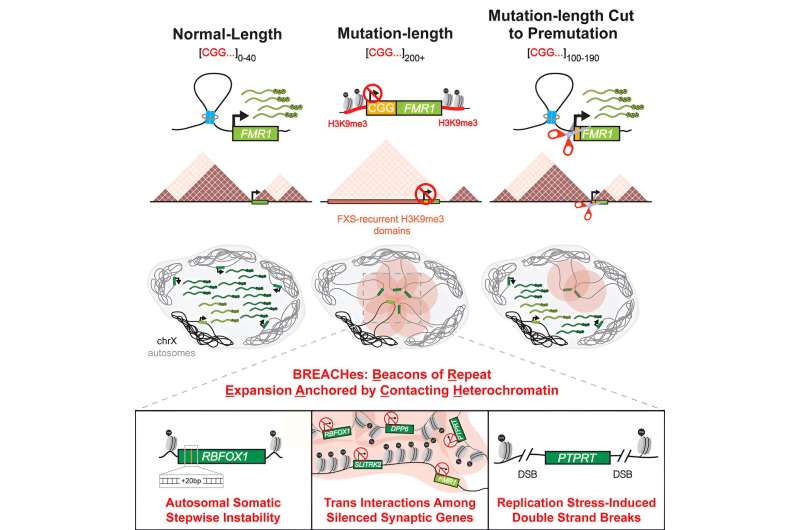
Researchers uncover unexpected molecular pattern in fragile X syndrome
DECEMBER 27, 2023 by Perelman School of Medicine at the University of Pennsylvania Researchers have found new disrupted genes and an unexpected molecular pattern—dubbed BREACHes—related to fragile X syndrome (FXS), a genetic disorder estimated by the Centers for Disease Control and Prevention to impact about 1 in 7,000 males about 1 in 11,000 females. The study, by researchers…
-
Identification of two novel and one rare mutation in DYRK1A and prenatal diagnoses in three Chinese families with intellectual Disability-7
Background and purpose: Intellectual disability-7 (MRD7) is a subtype disorder of intellectual disability (MRD) involving feeding difficulties, hypoactivity, and febrile seizures at an age of early onset, then progressive intellectual and physical deve…
-
Importance of comprehensive genetic testing for patients with suspected vascular Ehlers–Danlos syndrome: a family case report and literature review
Vascular Ehlers–Danlos syndrome (vEDS), the most severe type of Ehlers–Danlos syndrome, is caused by an autosomal-dominant defect in the COL3A1 gene. In this report, we describe the clinical history, specific phenotype, and genetic diagnosis of a man w…
-
Whole exome sequencing reveals genetic landscape associated with left ventricular outflow tract obstruction in Chinese Han population
Left ventricular outflow tract obstruction (LVOTO), a major form of outflow tract malformation, accounts for a substantial portion of congenital heart defects (CHDs). Unlike its prevalence, the genetic architecture of LVOTO remains largely unknown. To …
-
Case report: Expanding the understanding of the adult polyglucosan body disease continuum: novel presentations, diagnostic pitfalls, and clinical pearls
Introduction: Adult polyglucosan body disease (APBD) has long been regarded as the adult-onset form of glycogen storage disease type IV (GSD IV) and is caused by biallelic pathogenic variants in GBE1. Advances in the understanding of the natural histor…
-
Whole-exome sequencing reveals novel variants of monogenic diabetes in Tunisia: impact on diagnosis and healthcare management
Introduction: Monogenic diabetes (MD) accounts for 3%–6% of all cases of diabetes. This prevalence is underestimated due to its overlapping clinical features with type 1 and type 2 diabetes. Hence, genetic testing is the most appropriate tool for obtai…
-
Incorporating CNV analysis improves the yield of exome sequencing for rare monogenic disorders—an important consideration for resource-constrained settings
Exome sequencing (ES) is a recommended first-tier diagnostic test for many rare monogenic diseases. It allows for the detection of both single-nucleotide variants (SNVs) and copy number variants (CNVs) in coding exonic regions of the genome in a single…
-
The landscape of actionable genomic alterations in lung adenocarcinomas in India
Lung adenocarcinoma (LUAD), the most prevalent form of non-small cell lung cancer (NSCLC), remains a leading cause of cancer-related death globally, including in India, with a 5-year survival rate below 10%. Despite these grim statistics, recent advanc…